
Almost Ready
SELF-SABOTAGE · 15 MIN READ
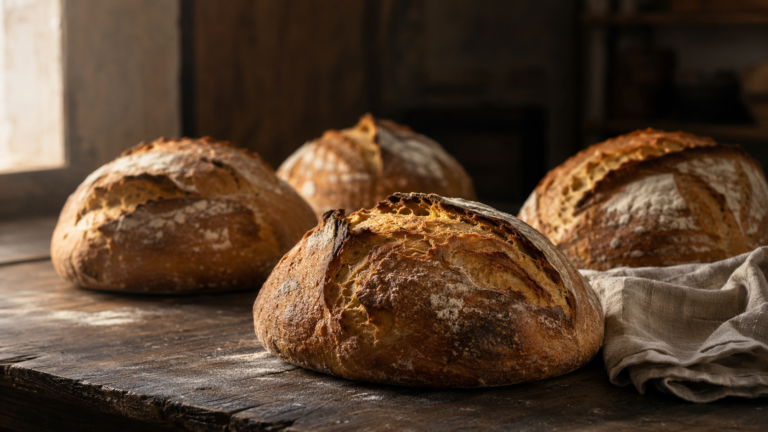
The Bread Everyone Knew
In a hillside town overlooking the Adriatic Sea lived a baker named Elara. Her family’s bakery stood on the corner of a narrow stone street, where the morning sun warmed its blue-painted shutters. For more than forty years, Elara’s father had risen before dawn to bake round loaves with crisp, golden crusts. People came from every part of town to buy them and carried the bread home beneath their arms, still warm enough to release steam through the paper wrapping.
Before setting out to sea, fishermen ate the bread with olives. Mothers served it beside bowls of soup, while children tore pieces from the soft center before reaching the dinner table.
Elara had worked beside her father since she was tall enough to stand on a wooden crate. Over the years, she learned to judge the oven’s heat by holding her palm near its open door. Bubbles beneath the surface told her whether the dough had risen properly. Whenever she kneaded, she pressed with the heel of her hand and turned the dough in one smooth motion, just as her father had taught her.
However, Elara possessed a gift that had not come from him.
A Gift of Her Own
Elara imagined flavors no one else had considered. After the bakery closed, she experimented with bread flavored with rosemary and roasted grapes. On other evenings, she created rolls filled with figs and walnuts or soft golden loaves scented with orange peel and honey. Then she left her creations on the cooling racks before going to bed.
Each morning, her father tasted them.
“You should sell this one,” he would say.
“It needs more salt,” Elara replied.
On another morning, he sampled a loaf made with lemon and thyme.
“This may be the finest bread you have baked.”
“The crust is too pale.”
“It looks golden to me.”
Turning the loaf beneath the light, Elara examined every side. “Only here.”
There was always something. One loaf seemed too dense, while another appeared too small. Sometimes, the fruit was unevenly distributed. At other times, the herbs tasted too strong—or not strong enough. Although her father often suggested placing one of her breads in the front window, Elara always gave the same answer: “It is not ready.”
The Room That Waited
When her father became ill, he could no longer manage the ovens alone. Therefore, Elara took over the bakery and continued making the familiar loaves exactly as he had made them. Customers praised her skill, relieved that nothing had changed.
Yet Elara dreamed of transforming the unused room beside the kitchen into a small café. In her imagination, wooden tables stood near the windows, pots of herbs lined the sill, and a long counter displayed her breads and pastries.
First, she drew the room on scraps of paper. Next, she collected cups from the market. Eventually, she purchased fabric for curtains and stored it in a cupboard. Whenever someone asked what she intended to do with the empty room, she smiled and said, “I am preparing something.”
Months passed. Then years slipped by. Nevertheless, the room remained empty.
Six Weeks
One spring, the town announced a festival celebrating local food and craftsmanship. Bakers, farmers, fishermen, and winemakers would line the harbor with stalls. Because visitors were expected from villages along the coast, the mayor came to Elara’s bakery with a request.
“We would like you to represent our town in the regional bread competition.”
Elara glanced toward the oven. “My father’s traditional loaf should be entered.”
“That bread is already known,” the mayor said. “We want something of yours.”
At once, Elara felt a tightening in her chest. “I would need time to prepare.”
“The festival is six weeks away.”
“That may not be enough.”
“You have been baking since you were a child.”
“Baking is not the same as creating a competition loaf.”
The mayor placed the entry form on the counter. “Then create one.”
That evening, Elara made bread with honey, walnuts, orange peel, and a ribbon of dark fig paste through its center. When it emerged from the oven, the crust shone like polished amber. Drawn downstairs by its fragrance, her father entered the bakery with his cane. Elara cut him a slice and waited while he ate.
The Loaf She Had Found
“Well?” Elara asked.
After studying the bread, her father said, “This is the loaf.”
“The walnuts should be toasted longer.”
“No.”
“Perhaps the orange is too strong.”
“It is not.”
Pointing toward the dark spiral, Elara frowned. “The center looks uneven.”
“Elara.”
She began cutting another slice. “What?”
“You have found the loaf.”
For a moment, Elara looked down at the bread. Finally, she answered, “I have found the beginning of it.”
During the following weeks, she baked the loaf again and again. Each time, she changed something. First, she added more honey; afterward, she used less. She replaced the walnuts with almonds, only to return to walnuts. Although a thicker fig filling looked richer, it prevented the center from baking evenly. Later, she altered the oven temperature, changed the flour, and adjusted the rising time.
Some versions were good, and a few were exceptional. Even so, none satisfied her.
The Moving Finish Line
Four days before the competition, Elara’s friend Tomas visited the bakery. He sold cheese beside the harbor, and that evening he found twelve loaves covering her worktable.
“Which one are you entering?” he asked.
“I have not decided.”
“The competition is in four days.”
Elara sighed. “I know.”
After tasting a slice from the nearest loaf, Tomas pointed toward it. “This one.”
“The filling leaked from the bottom.”
He turned it over and found a narrow line of fig beneath the crust. “No one will see that after it is sliced.”
“But I will know.”
Rather than argue, Tomas tried another loaf. “Then enter this one.”
“The walnuts are not evenly spaced.”
“People are eating bread, Elara. They are not counting walnuts.”
She took the loaf from him. “You do not understand what the judges will notice.”
“Perhaps not. However, I understand that you move the finish line every time you approach it.”
Elara stiffened. “I am trying to make the bread worthy of the competition.”
“Are you?”
“What else would I be doing?”
Tomas looked around the crowded kitchen. “Making certain that no loaf is ever finished enough to be judged.”
With her back to him, Elara said, “You should go. I have work to do.”
The Loaf on the Paddle
On the night before the festival, Elara prepared one final batch. She measured every ingredient carefully and toasted the walnuts until their fragrance filled the kitchen. Next, she folded in the orange peel, spread the fig paste evenly, and shaped the dough into a perfect round.
Afterward, she waited. The dough rose beautifully, and soon Elara stood before the oven with the loaf resting on a wooden paddle. All she had to do was slide it inside.
Instead, she imagined the judges cutting through the crust. Perhaps the center would be hollow, or the orange might overpower the fig. They could taste it and wonder why the town had chosen her.
Worse, they might praise it. In that case, customers would ask for more. The mayor might invite her to other festivals, and people would expect new creations. Finally, she might have to open the café she had discussed for years. If she succeeded once, however, she could fail where everyone could see her the next time.
The familiar loaves felt safe because her father’s reputation protected them. This bread, however, would carry only her name.
The Flaw She Could Control
While examining the risen dough, Elara noticed a small crease near its edge. She pressed it flat, but the dough sank beneath her fingers. Next, she tried to reshape it, causing the surface to wrinkle. Frustrated, she kneaded it again and destroyed the air that had taken hours to develop. Finally, she stood over the flattened dough, breathing heavily.
From the doorway came her father’s voice. “Did the bread do something wrong?”
Elara turned. “I found a crease.”
“I see.”
“It would have opened while baking.”
“Perhaps.”
Looking toward the ruined dough, she whispered, “It was not ready.”
Her father crossed the kitchen. “When you were eight, you entered a running race during the summer festival.”
“What does that have to do with bread?”
“You were the fastest child in your class.”
Elara shook her head. “I do not remember.”
“I do. On the morning of the race, you complained that your shoe hurt. You tied it, untied it, and tied it again. When the race began, you remained at the starting line.”
Folding her arms, Elara replied, “I was a child.”
The Pattern Beneath Perfection
Her father continued. “When you were seventeen, your teacher submitted your drawings to an art school.”
“I wanted to become a baker.”
“Yet you tore up the portfolio before it could be mailed.”
“The drawings were not good enough.”
“And what became of your plan to open the café?”
“I am still planning it.”
His gaze moved toward the closed door of the empty room. At once, anger rose within Elara.
“Do you think I do not work hard?”
“I have never known anyone who works harder.”
“Then do you believe I am lazy?”
“No.”
“What are you saying?”
Resting both hands on his cane, he answered, “You labor very hard to avoid discovering what might happen if you truly begin.”
Elara stared at him. However, her father continued gently.
“Whenever something matters deeply to you, you find a flaw at the final moment. Then you destroy the work yourself.”
“I am protecting it from failure.”
Her father shook his head. “No. You are choosing a failure you can control.”
What Fear Had Hidden
The words settled heavily between them. Until then, Elara had believed she was demanding excellence from herself. Now she recognized the fear concealed within that demand. If she never entered the competition, no judge could reject her. Likewise, if she never opened the café, no customer could abandon it.
By ruining the bread herself, Elara denied the world the chance to decide whether it was worthy. She had mistaken retreat for high standards.
“What if I am not as gifted as everyone believes?” she whispered.
“Then you will learn.”
“Suppose they dislike it?”
“Some may.”
Elara looked toward the ovens. “What if I embarrass the bakery?”
Her father smiled. “Bread can be burned, dropped, flattened, or forgotten in the oven. The bakery has survived all of these things.”
Then he lifted the ruined dough from the table. “But nothing can be tasted while it remains on the paddle.”
Choosing to Begin
There was no time to make another slow-rising loaf before morning. At first, Elara nearly withdrew from the competition. Instead, she gathered the remaining ingredients and began again. Using a simpler method, she allowed the dough to rise near the warm oven.
As dawn colored the windows, she shaped the loaf. Once it rested on the paddle, Elara noticed that the spiral of fig was not perfectly centered. Her hand moved toward it—and stopped. Although her fingers trembled, she opened the oven and slid the bread inside.
Later that morning, festival stalls stretched along the harbor. Wheels of cheese, jars of honey, woven baskets, painted dishes, and bunches of herbs covered the tables. Among them, Elara placed her loaf before the judges. Its crust was slightly darker on one side, and a thin line of filling had escaped along the bottom.
When the knife broke through the crust, one cluster of walnuts appeared near the center. Every imperfection seemed to call her name. The judges tasted the bread, and one whispered to another. Nevertheless, Elara resisted the urge to explain the rushed dough, the ruined first loaf, or the uneven oven.
An Imperfect Offering
That afternoon, Elara’s bread received second place. For a moment, disappointment pierced her, and she began listing everything she should have done differently. Then a woman approached with her young daughter.
“Are you the baker who made the fig bread?”
Elara nodded.
“My daughter tasted a sample and has spoken of nothing else. May we buy a loaf?”
“I only made the one.”
“Will you have more tomorrow?”
Elara almost said the recipe was not ready. Instead, she answered, “Yes.”
The following morning, six people waited outside the bakery before it opened. Within a week, customers were asking whether they could sit and eat their bread with coffee. Once again, Elara looked toward the empty room.
Its walls needed painting, the floor was uneven, and the cups she had collected did not match. In the past, those flaws would have convinced her to wait. This time, she opened the shutters. Tomas helped carry in three tables, while her father hung the curtains—even though one panel was slightly longer than the other.
Open Before Perfect
On the café’s first morning, Elara wrote a message on a small board and placed it beside the door:
We are open before we are perfect.
Of course, the café did not succeed without difficulty. Some weeks were quiet. One new pastry failed so badly that even the village dogs refused it. Cups broke, customers complained, and a winter storm damaged the roof and soaked two tables.
Even so, Elara kept going. Whenever she attempted something new, the old voice returned. It urged her to wait, prepare longer, and correct one more flaw before allowing anyone to see. In time, however, she learned to recognize it. Sometimes, the voice was wisdom asking for care. At other times, it was fear reaching for the dough.
Years later, a young apprentice named Sofia created a loaf filled with cherries and almonds. She prepared it three times, but every version ended in the rubbish bin. As Sofia began a fourth attempt, Elara watched her.
“What was wrong with the last one?” she asked.
“The cherries made one side darker.”
“How did it taste?”
Sofia hesitated. “I did not taste it.”
The Courage To Be Seen
“Why not?” Elara asked.
“I knew it would not be good enough.”
Elara removed the newest dough from Sofia’s hands and retrieved the discarded loaf. After cutting away the part that had touched the bin liner, she sliced the rest. The bread was sweet, tender, and unlike anything the bakery sold.
Sofia tasted it, and her expression changed. “I threw it away.”
“Yes.”
“But I thought I was improving it.”
Elara nodded. “So did I, once.”
Then she placed the remaining slices on a plate and carried them toward the café.
“Where are you taking it?”
“To the customers.”
Sofia stared at the uneven loaf. “But it is not ready.”
Elara smiled. “Sometimes ready is not a feeling Sofia. Sometimes it is the choice to stop hiding and let your work be seen.”
The Wisdom
When Self-Sabotage Disguises Itself as Caution
Self-sabotage rarely announces itself as destruction. More often, it disguises itself as caution, perfectionism, preparation, or patience. It tells us that we need one more qualification before applying, another revision before sharing our work, or one final sign before making a decision.
Certainly, preparation is sometimes necessary. However, it becomes self-sabotage when its hidden purpose is to ensure that we never face uncertainty.
For example, we may procrastinate until an opportunity passes. Perhaps we choose unavailable people and later conclude that love never stays. After one difficult day, we might abandon a healthy habit because beginning again would require us to believe that change remains possible. Likewise, some of us create conflict just as life becomes peaceful.
At other times, we spend what we intended to save, retreat when progress becomes visible, or speak to ourselves so cruelly that we lose the strength to continue. Then, pointing toward the outcome, we say, “See? I knew it would not work.”
The Fear Beneath the Pattern
There is a strange comfort in causing the ending we fear. A disappointment we create can feel safer than a hope placed in the hands of an uncertain world. By withdrawing first, rejecting ourselves first, or ruining the opportunity first, we avoid waiting for someone else to do it. In this way, we remain in control.
Yet control is not the same as safety. Moreover, avoiding disappointment also prevents discovery.
An unfinished book cannot be rejected, but neither can it be read. Although an unopened heart cannot be broken, it also cannot be deeply known. Similarly, a canoe kept forever on the shore will never sink; however, it will never carry us anywhere new.
Healing begins when we become curious about the moment before we undermine ourselves. What are we afraid will happen if we succeed? What responsibility might growth require? Whose voice taught us that mistakes make us unworthy? Finally, what familiar identity would we have to release if our lives truly changed?
Protection That Outlived the Danger
These questions are not accusations. Instead, they are openings. Often, self-sabotage is an old form of protection that has remained long after the original danger passed.
We do not overcome the pattern by hating ourselves for being afraid. Rather, we recognize the fear and understand that it once tried to protect us. Then, with compassion and courage, we refuse to let it make every decision.
At first, changing the pattern may feel unsafe. After all, familiar disappointment can seem easier to bear than an unfamiliar possibility. Nevertheless, each honest step teaches us that uncertainty is not the same as danger.
Therefore, healing does not require us to shame the frightened part of ourselves. It asks us to listen, offer reassurance, and choose from the life before us instead of the fear behind us.
One Honest Action
We do not need complete confidence. Instead, we need one honest action taken before fear can close the door again.
Submit the application. Keep the appointment. Save the first dollar. Accept kindness without searching for its hidden cost. Above all, place the bread in the oven while your hands still tremble.
The result may not be perfect. Perhaps it will not receive first place, or it may reveal weaknesses that still need strengthening. Nevertheless, an imperfect beginning can teach us what endless preparation never will.
Eventually, improvement requires exposure, growth requires risk, and the life we desire can no longer remain safely inside our imagination. At that moment, we must stop protecting our potential from the possibility of failure. Instead, we must allow it to become real.
Therefore, do not destroy today’s honest offering because it has not yet become tomorrow’s masterpiece. Let it be seen. Allow it to be tasted.
Perfection will always ask you to wait. Courage asks you to begin.
For Further Reading:
Visit Southern New Hampshire University: How to Stop Self-Sabotage ↗
This free article explains how fear of failure and rejection can lead us to undermine our own progress. It also offers practical steps for recognizing self-sabotaging patterns and choosing actions that move us forward.