
Lessons From The Empty Net
EMBRACING CHANGE · 6 MIN READ
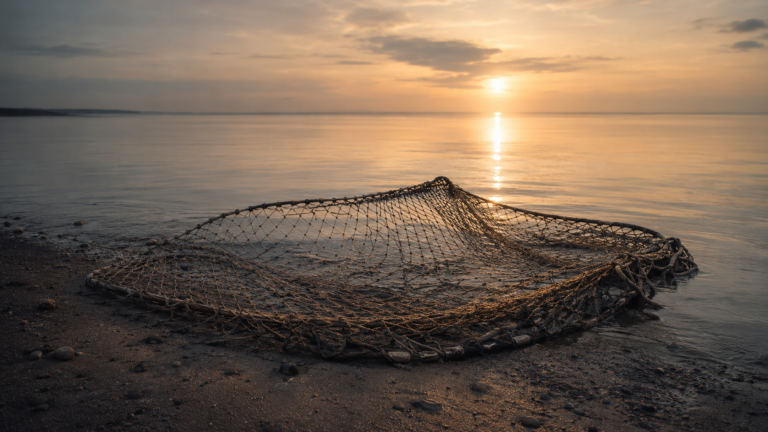
The Place He Knew
Each morning before dawn, a fisherman carried his net down the narrow path to the sea. He had learned to fish beside his father, just as his father had learned from the generations before him. He knew where the currents gathered, where the reef opened into deeper water, and where schools of silver fish moved beneath the moonlight. For many years, the sea provided everything he needed.
Then, without warning, the fish disappeared.
At first, the fisherman cast his net in the place where they had always gathered. When he pulled it from the water, it was empty.
The following morning, he returned earlier and cast farther. Again, the net came back empty. Even so, he continued paddling to the same place day after day. He changed the knots, lengthened the ropes, and cast until his arms trembled. Yet each evening, he returned with nothing but seawater glistening in the woven fibers.
Meanwhile, the other villagers began searching for new fishing grounds. Some followed the birds beyond the northern cliffs, while others traveled toward a distant reef where the water was colder and unfamiliar. Still, the fisherman remained in the place he knew.
“My father found fish here,” he said. “His father found them here before him. If I cast the net often enough, they will return.”
What the Sea Was Saying
One morning, the fisherman’s young daughter asked to accompany him. Together, they paddled beyond the reef. Once they reached the familiar fishing grounds, he lowered the net and waited.
The sun climbed higher. At last, he pulled the net into the canoe. Once again, it was empty.
His daughter leaned over the side and studied the water. “Perhaps the sea is asking us to look somewhere else,” she said.
“The sea does not speak,” the fisherman replied.
The girl dipped her fingers beneath the surface. “It speaks all the time. We simply do not always like what it says.”
The fisherman frowned and prepared to cast again.
However, as he lifted the net, a strong current tore it from his hands. The rope tightened around his wrist, pulling the side of the canoe dangerously close to the water.
“Let it go!” his daughter cried.
Instead, the fisherman gripped the rope more tightly. “This net belonged to my father.”
The current pulled harder, and the canoe tilted beneath them.
Their water vessel rolled across the floor, while one of the paddles slipped into the sea.
Even then, the fisherman refused to release the rope.
“I cannot lose it,” he said.
His daughter looked into his frightened eyes. “Then the net will take more than itself.”
The Courage to Release
Dark water rose along the side of the canoe. Finally, with trembling fingers, the fisherman released the rope. The net vanished beneath the waves, and at once, the canoe righted itself.
For a long while, neither of them spoke. The fisherman stared at the place where the net had disappeared.
Without it, he felt he had lost more than rope and woven fiber. He had lost the memory of his father’s hands teaching him to tie each knot. Moreover, he had lost the certainty of knowing who he was and what each morning required of him.
“How can I be a fisherman without my net?” he asked.
His daughter picked up the remaining paddle. “Perhaps that is not the question the sea is asking.”
Together, they drifted beyond the familiar reef. Without the weight of the net, the canoe moved differently.
The current that had frightened him now carried them toward the eastern side of the island, where steep cliffs rose from the water.
The fisherman had never ventured there before. His net would have torn against the rocks, so he had always turned away.
As they drew closer, his daughter pointed toward the surface. Small fish leaped through the sunlight, while the water below shimmered with life.
Instinctively, the fisherman reached for the net that was no longer there. Finding only empty space, he slowly lowered his hands.
“All these fish,” he whispered, “and I have no way to catch them.”
Another Way
Beside the canoe, his daughter noticed a fallen branch drifting on the water. She lifted it and examined its curved end.
“What if we make another way?”
The fisherman nearly laughed. A branch was not a net, and a child’s idea could not replace the wisdom of generations. Yet the fish continued dancing around them, while the old way lay somewhere beneath the sea.
So, instead of dismissing her, he listened.
Together, they tied a short line to the branch and fashioned a hook from a small piece of shell. The new tool was simple and unfamiliar.
Although the fisherman’s hands had once moved confidently across a net, they now felt awkward holding the branch.
His first cast landed too close to the canoe. The second tangled around the paddle. However, the third slipped beneath the surface.
They waited.
Nothing happened.
The fisherman sighed. “This is not how I was taught.”
“No,” his daughter replied. “It is how we are learning.”
Encouraged by her words, he cast again. This time, the line tightened. Working together, they drew a bright silver fish from the water.
The fisherman stared at it in astonishment. One fish would not fill the canoe or feed the entire village.
Nevertheless, it was enough for that evening.
The following day, they returned and fashioned stronger hooks. They watched the birds, studied the unfamiliar current, and discovered where fish gathered among the rocks.
Some days, they caught many.
On other days, they caught nothing.
Even so, the fisherman no longer expected the sea to repeat the past.
In time, other villagers joined them. Some brought woven baskets, while others fashioned traps that could rest safely between the stones. Each person noticed something the others had overlooked. Together, they discovered new ways to receive what the ocean offered.
What Remained True
Many seasons later, the fisherman sat on the shore repairing a fishing line while his daughter prepared a canoe.
“Do you ever miss your father’s net?” she asked.
“Every day,” he replied.
“Do you wish you had never lost it?”
The fisherman looked beyond the reef, toward the place where the current had carried it away.
“For a long time, I believed that losing the net meant losing everything my father had taught me. Eventually, I understood that his wisdom had never been held within its knots.”
“Then where was it?”
The fisherman placed a hand over his heart. “Here—in the patience to watch, the humility to learn, and the courage to return to the sea after coming home empty.”
His daughter smiled before pushing the canoe into the water. Soon, she was paddling toward the eastern cliffs, carrying no net and following no path he had shown her. Although her way would be different from his, the fisherman did not call her back.
At last, he understood. Tradition was not the worship of an old way. Rather, it was the carrying forward of what remained true when the old way could carry them no farther.
Behind him, the empty shore held the memory of all that had been. Before him, the sea stretched wide and unfinished. Beneath its ever-changing surface, life was always moving—and those willing to listen could learn to move with it.
The Wisdom
When Perseverance Becomes Attachment
Sometimes, the methods that once sustained us no longer bring life into our hands. Even so, we may return to the same place, repeat the same effort, and cling more tightly to what worked before. We convince ourselves that perseverance means refusing to change.
Yet devotion to the past is not the same as faithfulness to its wisdom. An empty net does not always mean we have failed. Instead, it may reveal that life has moved and is inviting us to move with it.
The Form May Change
Releasing an old role, plan, relationship, or way of living can feel like abandoning part of ourselves. However, what shaped us is not lost simply because its form must change.
We honor those who taught us not by remaining forever where they stood, but by carrying their deepest lessons into waters they never had to navigate. Although our path may look different, the wisdom beneath it continues to guide us.
Open Hands
The lessons of the empty net are not lessons of defeat. Rather, they remind us that an ending can open the way to greater awareness, humility, and courage.
An empty net leaves our hands open. At first, that emptiness may feel vulnerable. However, open hands are ready to learn, receive, and create. Most importantly, they are free to discover a new way forward.
For Further Reading:
Visit the Greater Good Science Center: How to Get Comfortable With Uncertainty and Change ↗
Perseverance is not always the same as wisdom. Sometimes the wiser choice is to recognize what no longer works and change course without abandoning the values that guided us. This article explores psychological flexibility – the ability to face uncertainty with curiosity, try new approaches, and discern when to persist and when to change.